


Blog
A Parent's Guide to Ballet Vocabulary: Plie, Releve, Tendu, and More in Plain English
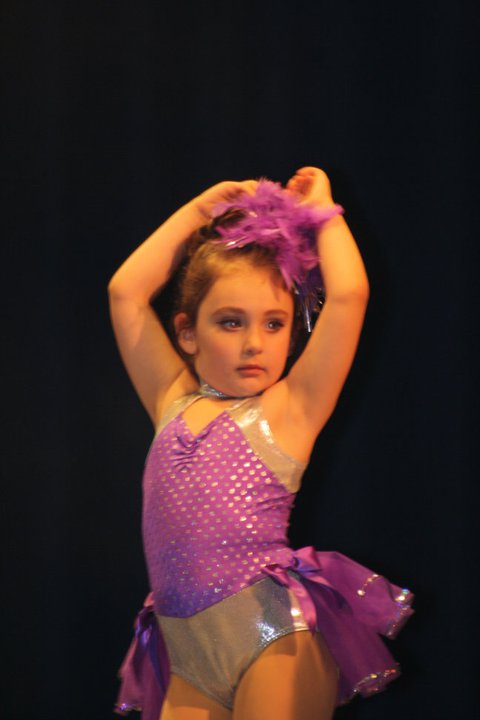
Your dancer comes out of ballet class glowing and announces that she did "twenty tendus and a chassé across the floor." You nod, smile, and wonder what on earth that means. If ballet sometimes sounds like a foreign language, that is because it is one. Nearly every ballet step has a French name, and those names have been used in studios around the world for centuries.
At Dance Connection Rochester, ballet is a foundation for so much of what our dancers learn, from jazz and lyrical to musical theatre. This article explains the most common ballet terms in plain English, so you can follow along when your dancer talks about class and maybe even try a few steps together in the kitchen.
If you have searched "ballet terms for parents" or "beginner ballet classes Rochester NY," here is a friendly guide to the words you will hear most often.
1. Plié (plee-AY): To Bend
A plié is a bend of the knees, done with the legs turned out from the hips and the back long and tall. It is usually the very first exercise at the barre, because it warms up the legs and teaches dancers to bend smoothly with control. A small bend is a demi-plié, and a deep bend is a grand plié.
Pliés are also how dancers start and finish almost every jump, which is why teachers care so much about them.
2. Relevé (rel-uh-VAY): To Rise
A relevé is a rise onto the balls of the feet (or, for advanced dancers in pointe shoes, onto the tips of the toes). It builds strength in the feet, ankles, and calves, and it is the base for balances and turns. When your dancer is practicing rising up and down while holding the kitchen counter, this is probably what they are doing.
Strong relevés are a big part of what our Pre-Pointe class develops before a dancer is ready for pointe.
3. Tendu (tahn-DOO): To Stretch
In a tendu, the dancer slides one foot along the floor until only the tip of the toe is touching, then slides it back in. It sounds simple, but it trains the feet to point fully, the legs to stay straight, and the body to stay still while one leg moves. Teachers often do many of them at the barre for exactly that reason.
When a dancer says they did "a lot of tendus," they were building the foot strength that makes every other step look clean.
4. Chassé (sha-SAY): To Chase
A chassé is a traveling step where one foot seems to chase the other across the floor. Young children often recognize it as a gallop or a smooth sideways skip. It shows up constantly in combinations that move across the room, and it is a common way to link one step to the next.
If your little one gallops through the house, they are already halfway to a chassé.
Curious which ballet class fits your dancer's age and experience? Contact Dance Connection Rochester and we will help you find the right place to start.
5. Arabesque (ar-uh-BESK): The Classic Line
An arabesque is a pose where the dancer balances on one leg while the other leg extends straight behind the body. It is one of the most recognizable images in ballet, the shape many people picture when they think of a ballerina. Young dancers begin with the back foot on the floor or low in the air, and the leg rises higher as strength and flexibility grow.
A beautiful arabesque takes years to build, and every version along the way counts.
6. Pirouette (peer-oo-ET): To Turn
A pirouette is a turn on one leg, usually with the other foot placed at the knee. Dancers learn to "spot" by keeping their eyes on one point and whipping the head around quickly, which helps them stay balanced and avoid dizziness. Most dancers start with quarter and half turns before working toward full single and double pirouettes.
Turns improve with patience, and our Ultimate Jazz class gives older dancers extra time to perfect them.
7. Port de Bras (por duh BRAH): Carriage of the Arms
Port de bras means the way the arms move from one position to another. Ballet has set arm positions, and dancers learn to pass through them smoothly and gracefully, with soft hands and relaxed shoulders. It is often the part of ballet that makes a dancer look elegant even when the legs are doing something simple.
Good arms are a sign that a dancer is thinking about the whole body, not only the feet.
8. Sauté and Jeté (so-TAY, zhuh-TAY): Jumps
A sauté is a jump that takes off from two feet and lands on two feet, starting and ending in a plié. A jeté is a jump from one foot to the other, and a grand jeté is the big, split-like leap across the floor that audiences love. Jumps are where all the strength from pliés, tendus, and relevés comes together.
Our sprung floors help cushion those landings, which is one of the reasons we invested in them.
More Ballet Words You Might Hear
Here are a few more terms that come up often in class:
- Barre: the wooden rail dancers hold for support during the first part of class
- Center: the part of class done in the middle of the room, away from the barre
- Turnout: rotating the legs outward from the hips, not just the feet
- First through fifth position: the five basic placements of the feet
- Passé: drawing one foot up to the knee of the standing leg
- Battement: a beating or kicking action of the leg
- Révérence: the bow or curtsy that ends a ballet class
Knowing a handful of these words can turn "what did you do today?" into a real conversation.
Why Ballet Uses French, and Why It Matters
Ballet developed in the royal courts of Europe, and much of its formal technique took shape in France. The French names stuck, and today a ballet class in Rochester uses the same vocabulary as one in Paris, London, or New York. That shared language is a gift. A dancer who knows what a tendu or a pirouette is can walk into any ballet class, anywhere, and follow along. It also helps dancers learn faster, because a teacher can call out a whole sequence of steps in a few words instead of describing each movement.
For parents, learning a few terms is less about getting the pronunciation perfect and more about showing interest. Ask your dancer to teach you a plié or show you an arabesque. Children love being the expert, and explaining a step out loud helps them understand it better themselves. If a word stumps you both, write it down and let your dancer ask the teacher next class. Our teachers are always happy to explain, and curiosity is exactly the attitude we hope dancers carry into the studio. We would much rather see a dancer enjoy learning than worry about being perfect.
Speaking the Language of Ballet
You do not need to become a ballet expert to support your dancer. A little vocabulary, a lot of curiosity, and a willingness to try a step or two at home will make you a wonderful audience.
Learn more about our ballet classes, read about our pre-pointe program, or contact Dance Connection Rochester with any questions about getting your dancer started.
‹ Back
Recent Posts
-
Healthy Body Image and Self-Confidence in Young Dancers
November 26, 2026
-
-
-
Helping a Shy Child Feel Comfortable in Dance Class
November 21, 2026
-
Giving Back Through Dance: How Our Studio Family Supports Rochester
November 19, 2026