


Blog
How Dance Builds Coordination and Motor Skills in Young Children
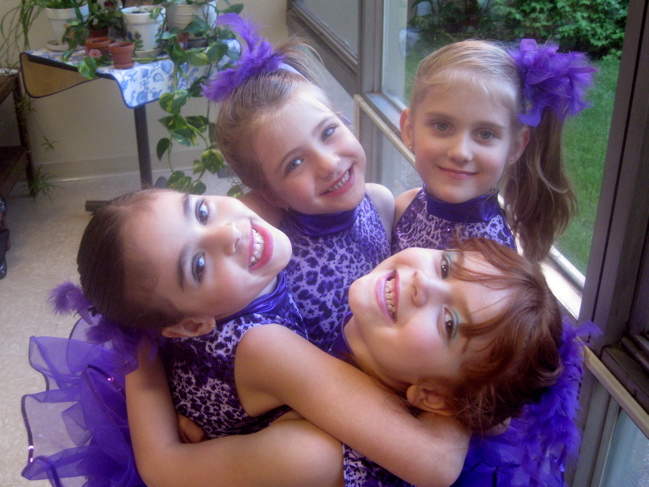
Watch a group of toddlers in a dance class for five minutes and you will see a lot of wobbling. Someone tips over during a balance, someone hops on the wrong foot, someone claps a beat after everyone else and grins anyway. To a parent it looks like happy chaos. To a teacher it looks like young brains and bodies doing exactly the work they need to do.
At Dance Connection Rochester, our youngest dancers start as early as 18 months, and we see firsthand how much movement and music help little ones grow. This article explains how dance supports coordination and motor skills in young children, including gross and fine motor skills, balance, crossing the midline, and spatial awareness.
If you have searched "dance classes for toddlers Rochester NY" or "activities to improve motor skills in young children," here is what dance can do for your little one.
1. Gross Motor Skills: The Big Movements
Gross motor skills involve the large muscles of the arms, legs, and core. Running, jumping, skipping, galloping, and marching are all gross motor activities, and they show up constantly in a young dance class. Every time a child leaps over a pretend puddle or gallops across the floor, they are strengthening muscles and practicing control.
Dance makes this practice feel like play, which is exactly how young children learn best.
2. Fine Motor Skills: The Small Details
Fine motor skills use the smaller muscles of the hands, fingers, feet, and toes. Our Tiny Tots classes include fine and gross motor skill work, using props, rhythm instruments, and simple hand movements. Shaking a small instrument on the beat, wiggling fingers to a song, pointing and flexing the feet in pre-ballet: each of these builds precision in small muscles.
The same hands that learn to tap a rhythm stick will soon be holding crayons and pencils.
3. Balance and Body Control
Balance is a skill, and like any skill it improves with practice. Young dancers work on standing on one foot, rising onto their toes, freezing in place when the music stops, and landing softly from small jumps. At first these are wobbly and brief. Over weeks and months, children hold their balance longer and recover more easily when they tip.
Good balance supports nearly every physical activity a child will try later.
4. Crossing the Midline
Crossing the midline means reaching one hand, arm, or leg across the center of the body to the other side. It sounds simple, but it requires both sides of the brain and body to work together, and it is an important developmental milestone for young children. Dance is full of it: touching the opposite knee, reaching across to the other side, turning, and patting a rhythm from one side of the body to the other.
Those silly cross-body movements in class are doing quiet, important work.
Have a question about whether a Tiny Tots class is right for your child? Contact Dance Connection Rochester and we will help you find the best fit.
5. Spatial Awareness
Spatial awareness is a child's understanding of where their body is in relation to the people and objects around them. In class, little ones learn to find their own spot, move without bumping into friends, travel forward and backward, go high and low, and follow lines and circles. These ideas help children move more confidently through crowded playgrounds and classrooms.
Concepts like over, under, near, and far become real when a child moves through them.
6. Rhythm and Timing
Early rhythm is a core part of our Tiny Tots classes. Clapping, stomping, and tapping to fun songs teaches children to coordinate their movements with something outside themselves, the beat of the music. Basic tap is a wonderful tool here, because children can hear their own feet and tell when they are matching the rhythm.
Timing a movement to music is coordination in its most joyful form.
7. Following Sequences and Directions
Dance asks young children to remember and follow short sequences, such as "march, march, jump, and spin." Holding a few steps in mind and then doing them in order connects listening, memory, and movement. Our classes blend basic tap, basic jazz, pre-ballet, and creative movement, so children practice many different kinds of sequences.
Following a simple dance pattern is great practice for following directions at school.
8. Social Skills Alongside Motor Skills
Coordination develops in a social setting too. In class, children take turns, wait for their cue, share props, hold hands in a circle, and copy a teacher. Social skills are part of what Tiny Tots classes build, and they grow side by side with physical ones. For our very youngest dancers, the Grownup and Me class lets a parent or caregiver share the experience.
Learning to move well and learning to be with others go hand in hand.
What Tiny Tots Classes Include
Our Tiny Tots program for young dancers brings together:
- Basic tap, introducing rhythm through the feet
- Basic jazz, for energy and big movement
- Pre-ballet, for posture, balance, and control
- Creative movement, for imagination and self-expression
- Fun songs that make every activity feel like play
- Props and rhythm instruments for fine motor practice
- Early rhythm work to build timing
- Social skills like turn-taking and following directions
Each piece supports coordination in a slightly different way.
For children 18 months to 3 years, we offer a Tap/Ballet/Acro combination class and the Grownup and Me class. Ages 4 to 5 can choose a Tap/Ballet/Acro combination or Hippity Hop. You can see every option on our class information page.
Why Every Child Develops at Their Own Pace
It is worth saying clearly: young children develop motor skills on very different timelines, and a wide range is completely normal. One three-year-old may hop on one foot easily while another is still working on jumping with both feet together. One child may clap right on the beat while another is happily a little behind. In class, we meet each child where they are, celebrate small wins, and keep the focus on fun rather than perfection. Many young dancers take a while to warm up, and some prefer to watch at first. Crying, especially in the first month, is normal too. All of it is part of the process, and our staff are always happy to help with shoe changes and the little moments that come with very young dancers.
Parents can support this growth at home without any special equipment. Put on music and dance together in the living room. Play freeze dance, march in a parade around the kitchen, or practice balancing like a flamingo. Try moves that cross the body, like patting the opposite knee. If you ever have questions about your child's physical development, your pediatrician is the right person to ask. Dance is not therapy, but it is a joyful, healthy way for little bodies to grow stronger and more coordinated, and it is one of the reasons we love teaching our youngest dancers so much.
Little Steps, Big Growth
Every wobble, gallop, and clap in a young dance class is part of a child learning to use their body with more confidence and control.
Learn more about our Tiny Tots dance and music classes, see the full list of options on our class information page, or contact Dance Connection Rochester to find the right class for your little one.
‹ Back
Recent Posts
-
Healthy Body Image and Self-Confidence in Young Dancers
November 26, 2026
-
-
-
Helping a Shy Child Feel Comfortable in Dance Class
November 21, 2026
-
Giving Back Through Dance: How Our Studio Family Supports Rochester
November 19, 2026