


Blog
How Dance Helps Kids in School: Memory, Patterns, Counting, and Focus
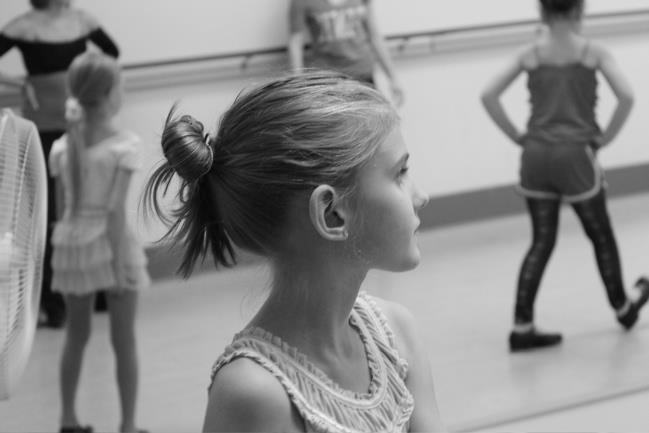
A lot of parents notice it before they can explain it. Their child, who struggles to remember where they left their shoes, can perform a two-minute dance from memory without missing a step. A kid who fidgets through homework will stand at the barre and concentrate for an hour. It makes a parent wonder whether the skills being built in dance class might be showing up somewhere else too.
At Dance Connection Rochester, we have always said that we teach more than just dance. We are not a tutoring center, and we would never promise that dance class will raise a report card grade. But we do see dancers practice, week after week, the kinds of thinking habits that are useful in a classroom. This article covers those habits honestly, without overstating what dance can do.
If you have searched "does dance help kids in school" or "dance classes for kids focus and memory Rochester NY," here is our practical, realistic take.
1. Learning Choreography Is Memory Practice
Every dance a child learns is a sequence they have to remember, often with dozens of steps in a specific order. Dancers learn it in pieces, review it, connect the pieces, and eventually perform the whole thing without a teacher in front of them. That process of chunking information and rehearsing it is a familiar strategy for remembering things in general.
Dance will not replace studying, but it gives kids regular, enjoyable practice at holding a lot of information in their heads.
2. Sequencing Is Built Into Every Class
Dance is full of "first this, then that." A combination might be three steps to the right, a turn, a pause, and a jump. Dancers have to keep the order straight, notice when something repeats, and understand how one movement leads into the next. Following multi-step instructions is a skill children use constantly in school, from math problems to science experiments.
Practicing sequences with the body is a different, and often more fun, way to practice the same kind of thinking.
3. Patterns Are Everywhere in Dance
Choreography is built from patterns. A phrase is repeated on the other side, a step is done twice slow and then four times fast, or a group of dancers takes turns in a set order. Teachers often point these patterns out so dancers can learn faster, and before long dancers start spotting them on their own.
Noticing patterns is one of the foundations of early math, and dance gives kids lots of chances to do it.
4. Counting Music Is Real Counting
Dancers count constantly. "Five, six, seven, eight" starts nearly every combination, and dancers learn that music is organized into beats and phrases of eight. In tap especially, dancers think about rhythms that fall between the beats, which means dividing time into smaller parts. Younger dancers in our Tiny Tots classes begin with early rhythm work, using fun songs, props, and rhythm instruments.
We are careful not to say dance teaches math. It simply gives kids a lively, physical reason to count and to feel how numbers fit together.
5. Focus Grows When It Is Practiced
A dance class asks children to listen, watch, and respond for a full class period. They have to pay attention to the teacher, to the music, and to where their body is in space, all at the same time. For many kids, that kind of focus is easier to build in an activity they enjoy than in one they find dull.
The more often a child practices paying attention, the more natural it tends to feel, in the studio and elsewhere.
Wondering which class would be a good fit for your child's age and attention span? Contact Dance Connection Rochester and we will help you choose.
6. Listening and Following Directions
Dance teachers give a lot of instructions, and many of them are quick and specific. "Start on your left foot." "Arms in second." "Wait for the music." Dancers learn to listen carefully the first time and to translate words into action. That habit of attentive listening is something classroom teachers value enormously.
Children who are used to following clear instructions in class often carry that comfort into school.
7. Mistakes Become Normal and Fixable
In dance, everyone gets steps wrong, all the time. Teachers correct, dancers adjust, and the class tries again. Children learn that a mistake is not a failure, it is just the next thing to work on. That attitude is useful in school, where kids who are afraid to be wrong sometimes stop trying.
A dancer who is comfortable trying again is building the same resilience a good student needs.
8. Movement Can Be a Healthy Reset
After a long school day of sitting, many children simply need to move. An evening dance class gives kids a physical outlet, a change of scenery, and a different kind of challenge. Some children seem more settled after a chance to move, though every child is different.
A balanced week with time to move is a healthy week, for school and for everything else.
School-Friendly Skills Practiced in Dance
Here are the habits we see dancers practicing most often:
- Remembering long sequences in order
- Breaking big tasks into smaller chunks
- Recognizing and repeating patterns
- Counting beats and phrases of music
- Listening carefully to spoken directions
- Paying attention for a full class period
- Recovering calmly from mistakes
- Working alongside classmates respectfully
None of these are magic, but they are real habits that children practice every week.
Choreography classes take some of these skills a step further. When older students create their own dances, they have to plan structure, choose patterns, and organize ideas from beginning to end, which is not so different from planning a piece of writing.
Keeping Expectations Realistic
It is worth being honest here, because parents deserve it. You will find plenty of bold claims online about dance and brain development, and some of them go far beyond what anyone can reasonably promise. We do not think a child should take dance in order to get better grades, and we would never suggest that dance is a substitute for reading, homework, or extra help when a child is struggling in school. Every child learns differently. Some will make obvious connections between dance and the classroom, and others simply will not, and that is perfectly fine.
What we can say with confidence is that dance gives children regular practice at memory, sequencing, patterns, counting, listening, and focus, all wrapped in something they enjoy. Kids who enjoy an activity tend to stick with it, and skills that are practiced consistently tend to grow. Beyond that, dance offers something that is valuable on its own: a place where a child can feel capable, move their body, make friends, and work hard toward something without the pressure of being perfect. If a dancer also happens to find that learning a long sequence makes their spelling list feel more manageable, that is a wonderful bonus. The real reason to dance, though, is the love of it.
More Than Just Dance
Dance is not homework, and it should never feel like it. But the habits children build in the studio are real, and they travel with them wherever they go.
Explore our class information page, read about our choreography classes, or contact Dance Connection Rochester to find the right class for your child.
‹ Back
Recent Posts
-
Healthy Body Image and Self-Confidence in Young Dancers
November 26, 2026
-
-
-
Helping a Shy Child Feel Comfortable in Dance Class
November 21, 2026
-
Giving Back Through Dance: How Our Studio Family Supports Rochester
November 19, 2026